Blockchain

A blockchain is a growing list of records, called blocks, cryptographically linked together. Each block contains a cryptographic hash of the previous block, a timestamp and the transaction data (usually represented as a Merkle tree). The timestamp proves that the transaction data existed at the time the block was published and is included in its hash.

As each block contains information from the previous block, a chain is formed in which the next block reinforces the previous block. Blockchains are resistant to data changes because, once written, the data in a particular block cannot be changed a posteriori without changing all subsequent blocks.

Blockchains typically operate in peer-to-peer networks and are used as a publicly distributed ledger in which nodes collectively communicate and verify new blocks according to a protocol. Although blockchain records are not immutable due to the possibility of forking, blockchains are internally secure and can be considered as an example of a distributed computing system with a high degree of Byzantine fault tolerance.

Based on the work of Stuart Haber, W. Scott Stornetta and Dave Baier, blockchain was popularised in 2008 by a person (or group of people) named Satoshi Nakamoto as a public ledger for transactions in the Bitcoin cryptocurrency. The identity of Satoshi Nakamoto remains unknown to this day. The introduction of the blockchain in Bitcoin made it the first digital currency to solve the problem of multiple consumption without the need for a trusted institution or a central server.

Bitcoin’s design influenced other applications and the blockchain, a publicly available and readable cryptocurrency. Blockchains are considered payment gateways. Private blockchains have also been proposed for commercial use, but Computerworld calls the sale of such privatised blockchains without a proper security model «snake oil». However, others argue that, if designed carefully, licensed blockchains can be more decentralised than unlicensed blockchains and therefore more secure.

What is a blockchain?

A blockchain is a system of recording information that makes it difficult or impossible to alter, hack or manipulate. A blockchain is essentially a digital ledger of transactions that are replicated and distributed across a network of blockchain computer systems.

A blockchain is a decentralised database shared by nodes in a computer network. As a database, a blockchain stores information electronically and digitally. The blockchain is best known for its key role in cryptocurrency systems such as Bitcoin, which provides a secure, decentralised record of transactions. The innovation of blockchain lies in ensuring the fidelity and security of data records and creating trust without the need for a trusted third party.

One of the main differences between traditional databases and blockchain is the way data is structured. A blockchain gathers information into aggregates called blocks. A block has a fixed capacity and, when it is full, it is closed and connected to previously filled blocks to form a data chain called a blockchain. Any new information following this newly added block is collected in a newly created block, which is also added to the chain as it is added.

While databases typically structure data in the form of tables, blockchains, as the name suggests, structure data in the form of blockchains (chunks). This data structure, when implemented in a decentralised manner, essentially creates an irreversible timeline of data. When a block is inserted, it becomes part of this timeline. Each block on the chain is assigned a timestamp that is accurate at the time it is added to the chain.

Key points

  • A blockchain is a shared database that differs from a traditional database in that it stores data in blocks and uses cryptography to connect the blocks together.
  • When new data arrives, it is inserted into a new block. When a block is filled with data, it is chained to the previous block, placing the data in chronological order.
  • Blockchains can store many different types of information, but are most often used as a ledger for transactions.
  • In the case of Bitcoin, the blockchain is used in a decentralised way, which means that no specific individual or group of individuals has control over it, but that all users have collective control over it.
  • Decentralised blockchains are immutable and any data entered cannot be reversed. In the case of Bitcoin, this means that transactions are permanently recorded and can be seen by anyone.

How does a blockchain work?

The purpose of a blockchain is to allow digital information to be recorded and distributed, but it cannot be altered. Blockchain is therefore the basis for an immutable ledger: a record of transactions that cannot be altered, deleted or destroyed. For this reason, blockchain is also known as distributed ledger technology (DLT).

The blockchain concept was first introduced as a research project in 1991 and first became widely commercialised in 2009 in the form of Bitcoin. Since then, the use of blockchain has expanded with the creation of various cryptocurrencies, decentralised financial applications (DeFi), non-transferable tokens (NFT) and smart contracts.

Decentralisation of blockchain

Imagine a company with a server farm of 10,000 computers that maintains a database with all its customer account information. That company owns a warehouse building with all those computers under one roof, and has complete control over each of them and all the information they contain. However, it is a single point of failure. What happens if there is a power outage in this place? What happens if the network connection is interrupted? What if it fries? What if the bad guys destroy everything with a single keystroke? In any of these cases, data can be lost or corrupted.

With blockchain, the data stored in this database can be distributed across multiple network nodes in different locations. This not only creates redundancy, but also ensures the fidelity of the stored data. If someone tries to change a record in one instance of the database, the other nodes will not be modified, which prevents an intruder from doing so.

If a user forges a record of a Bitcoin transaction, all other nodes are compared with each other, making it easier to identify the node with the incorrect information. This system helps to create an accurate and transparent sequence of events. In this way, no node in the network can modify the information stored in the network.

As a result, information and history (e.g. cryptocurrencies) becomes irreversible. Such a record could be a list of transactions (e.g. of cryptocurrencies), but it is also possible for a blockchain to store all kinds of information, such as legal contracts, government identifiers, company inventories, etc.

To validate a new record or entry on the blockchain, a large amount of computing power in the decentralised network needs to agree. To avoid malicious transaction verification and double-spending, the blockchain is protected by consensus mechanisms such as Proof of Work (PoW) and Proof of Stake (PoS). These mechanisms allow agreements to be reached without the need for a responsible node.
Transparency

Because the Bitcoin blockchain is decentralised, all transactions are transparent to individual nodes and the blockchain driver, allowing anyone to see what is happening in real time. Each node has its own copy of the chain, which is updated as new blocks are confirmed or added. This means you can follow the movement of Bitcoin wherever you are.

For example, in the past exchanges have been hacked and people who had stored their bitcoins on the exchange lost everything. The hackers may have been completely anonymous, but the bitcoins they obtained were easily traceable. If the bitcoins stolen in these hacks are transferred or spent anywhere, they will be visible.

Of course, the records stored on the Bitcoin blockchain are encrypted (as are most blockchains). This means that only the owner of a record can decrypt it to reveal his or her identity (using a public/private key pair). This allows blockchain users to remain anonymous while maintaining transparency.

Is blockchain secure?

Blockchain technology provides decentralised security and trust in several ways. Firstly, new blocks are always stored linearly and chronologically. This means that they are always added to the «end» of the blockchain. Once a block has been added to the end of the blockchain, it is very difficult to retroactively change the content of that block, unless there is a consensus of the majority of the network.

This is because each block contains, in addition to its own hash, the hash of the previous block and the aforementioned timestamp. A hash code is created by a mathematical function that converts numerical information into a sequence of numbers or letters. If this information is altered in any way, the hash code will also be altered.

Suppose a hacker, who also runs a node in the blockchain network, wants to steal someone else’s cryptocurrency by changing the blockchain. If he modifies his single copy, it will no longer match those of the others. When the others compare their copies, they will see that this copy stands out, and the hacked version of the chain will be discarded as illegal.

For such a hack to succeed, the hacker would have to control and change more than 51% of the copies of the blockchain at the same time, so that his new copy would be the majority copy, resulting in a cohesive chain. Such an attack would require an enormous amount of money and resources, as each block would have to be recreated anew, with different timestamps and hash codes.

Given the size of many cryptocurrency networks and their rate of growth, the cost of achieving such a feat could be enormous. Not only would the cost be enormous, but it could also be wasteful. This behaviour should not go unnoticed by network members as they see this radical change in the blockchain. Network members then join the new, unaffected version of the blockchain.

As a result, the value of the compromised tokens is drastically reduced, rendering the attack useless, as the attacker gains control of useless assets. The same can happen if an attacker attacks a new Bitcoin fork. It was created to provide an economic incentive and not to attack a participating network.

Bitcoin and the Blockchain

Blockchain technology was invented in 1991 by Stuart Haber and W. Scott Stornetta, two researchers who wanted to create a system in which the timestamps on files could not be manipulated. However, the first real use of blockchain came almost 20 years later, with the launch of Bitcoin in January 2009.

Bitcoin’s protocol is based on the blockchain. In a study describing this digital currency, Satoshi Nakamoto, the creator of Bitcoin, describes it as «a new electronic money system that is completely peer-to-peer and has no trusted third party «2.

It is important to understand here that, although Bitcoin uses the blockchain only as a means to record a transparent ledger, in theory the blockchain can always record any number of data. As mentioned above, this could be transactions, votes in elections, inventories of goods, government IDs, housing documents, and so on.

Tens of thousands of projects are currently trying to implement blockchain in various ways to benefit society, not only to record transactions, but also as a means to securely vote in democratic elections, for example. The immutability of blockchain means that fraudulent voting can be more sophisticated. For example, a voting system could work by issuing a single cryptocurrency or token to every citizen in the country.

Each candidate would be assigned a specific wallet address, and voters would send their tokens or cryptocurrencies to the address of the candidate they wish to vote for. The transparency and traceability of blockchain eliminates the need for manual vote counting and the possibility of malicious manipulation of physical votes.

Blockchain and banking

It has been said that blockchain has the power to disrupt the financial industry, in particular payments and banking functions. However, banking and decentralised blockchain are two very different things.

To understand the difference between banking and the blockchain, let’s compare the banking system with the implementation of the Bitcoin blockchain.

How does a blockchain work?

It is already known that the blocks of the Bitcoin blockchain store data on Bitcoin transactions. Currently, there are more than 10,000 cryptocurrency systems running on the blockchain. However, it has become clear that blockchains are also a reliable way to store data about other types of transactions.

Companies that have adopted blockchain include Walmart, Pfizer, AIG, Siemens and Unilever. IBM, for example, has created a blockchain called Food Trust to track the journey of food to its location.

Why do we want to do this? The food industry has experienced countless outbreaks of E. coli, Salmonella and Listeria, as well as toxic substances accidentally introduced into the food supply. Until now, it has taken weeks to find the origin and cause of an outbreak in people’s diets. By using blockchain, brands can trace food from its origin to each stop and delivery.

If a contaminated food product is found, the source can be traced at every stop. Not only that, but now these companies can see everything they might come into contact with, allowing them to detect problems more quickly and save lives. This is just one example of the practical application of blockchain, but there are many other ways in which it is being used.

Banking and finance

Perhaps no sector would benefit more from the introduction of blockchain into its operations than the banking sector. Financial institutions are typically open five days a week. This means that if you deposit a cheque at 18:00 on a Friday, you will have to wait until Monday morning for the money to arrive in your account. Even if you deposit during business hours, it can take one to three days for your transaction to be confirmed due to the sheer volume of transactions banks process. The blockchain, on the other hand, never sleeps.

By integrating blockchain with banks, consumers can have their transactions processed in as little as 10 minutes, which is essentially the time it takes to add a block to the blockchain, regardless of holidays, time of day or week. Blockchain also allows banks to exchange funds between institutions more quickly and securely.

Equity trades, for example, can take up to three days (or longer for international trades) to settle and clear, during which time the funds and shares are frozen.

Given the amount of money involved, even a few days’ transfer represents a significant cost and risk for the bank. Similarly, Capgemini, a French consultancy, estimates that blockchain-based applications could save consumers up to $16 billion a year in banking and insurance costs.4

Coins

The blockchain is the basis of cryptocurrencies such as Bitcoin. The US dollar is controlled by the Federal Reserve. Under this central control, user data and currency are technically subject to the wishes of banks and governments. If a user’s bank is hacked, the user’s personal data is at risk. If your bank fails, or if you live in a country with an unstable government, the value of your currency could be at risk. In 2008, several failed banks were bailed out, partly with taxpayers’ money. It was this fear that led to the invention and development of Bitcoin in the first place.

The blockchain allows Bitcoin and other cryptocurrencies to be traded without the involvement of a central authority, decentralising their operation through a computer network. This not only reduces risk, but also eliminates many processing and transaction fees. It also makes the currency more stable for residents of countries with unstable currencies and financial infrastructures, as it increases the number of applications and broadens the network of people and institutions with whom it can be traded both domestically and internationally.

Using a cryptocurrency wallet to open a savings account or as a means of payment is especially important for those without a national identity. Some countries may be ravaged by war or lack the national infrastructure to enable identification. Citizens of these countries may not have access to savings or brokerage accounts and therefore may not be able to keep their assets safe.

Health

Healthcare organisations can use blockchain to securely store patients’ medical records. Once the medical record is created and signed, it is written to the blockchain, providing the patient with proof and assurance that the record has not been tampered with. By encrypting these personal health records with a private key and storing them on the blockchain, only certain people will be able to access them, ensuring privacy.

Asset register

If you have spent any time at your local land registry, you will know that the process of registering deeds can be cumbersome and inefficient. Nowadays, deeds in kind must be sent by an official to the local registry office, where they are manually recorded in a central database and in the county archives. In the case of property disputes, it is necessary to check the property claim against an official index.

This process is not only costly and time-consuming, but also prone to human error, as inaccurate information reduces the effectiveness of property tracking. With blockchain, there is no need to scan documents or track physical documents at the local registry office.

When property rights are stored and verified on the blockchain, owners can be sure that their documents are accurate and recorded forever.

In conflict-torn countries, or in areas with little public or financial infrastructure, let alone a civil law registry, it is almost impossible to prove ownership of assets. If groups of people living in such areas have access to a blockchain, they can create a transparent and clear chronology of ownership.

Smart contracts

A smart contract is a piece of computer code that can be incorporated into a blockchain to facilitate, verify or trade contracts. Smart contracts operate on the basis of a set of conditions agreed by the user. Once these conditions are met, the terms of the contract automatically come into effect.

For example, suppose a prospective tenant wants to rent a flat using a smart contract. The landlord agrees to give the tenant the door code of the flat after the tenant has paid the deposit. When both the tenant and the landlord send their part of the contract to the smart contract, the smart contract stores the door code and automatically exchanges it for the deposit on the day the tenant initiates the contract.

If the landlord does not provide the door code at the end of the lease date, the smart contract will return the deposit. This avoids the costs and formalities normally associated with the use of notaries, third parties and lawyers.

Chain of custody

As in the IBM Food Trust example, suppliers can use the blockchain to record the origin of purchased materials. This allows companies to verify not only the authenticity of products, but also common labels such as «organic», «local» or «fair trade».

As Forbes magazine reports, the food industry is increasingly using the blockchain to track and secure food from farm to fork.

Voting rights

As mentioned above, blockchain can be used to simplify modern voting systems; as tested in West Virginia in mid-November 2018, blockchain-based voting has the potential to eliminate voter fraud and increase voter turnout.

Using blockchain in this way makes electoral fraud virtually impossible. Blockchain protocols also maintain the transparency of the electoral process, reduce the number of staff needed to conduct an election and provide the authorities with the results almost immediately. This eliminates the need for recounts and the fear of fraud affecting the election.

Advantages and disadvantages of blockchain

The blockchain, due to its complexity, has unlimited potential as a decentralised recording medium. The applications of blockchain technology can range from improving privacy and security for users to reducing processing costs and errors, and go beyond the above. However, there are also disadvantages.

Types of blockchain

There are four types of blockchain

  1. Public blockchains
    A public blockchain is an open, decentralised computer network that anyone can access to request and verify (check the accuracy of) transactions. The person who verifies the transaction (the miner) receives a commission.

Public blockchains use a consensus-building mechanism called proof-of-work or proof-of-stake (see below). Common examples of public blockchains are the Bitcoin and Ether blockchains.

  1. Private blockchains
    A private blockchain is not public and has limited access. Anyone wishing to access it must obtain permission from the system administrator. They are usually managed by a single organisation, which means they are centralised. Hyperledger, for example, is a licensed private blockchain.
  2. Hybrid blockchain or consortium
    A consortium is a combination of a public blockchain and a private blockchain containing both centralised and decentralised elements. Examples include the Energy Network Foundation, Dragonchain and R3.

Note: There is not 100% agreement on whether they are different terms. Some distinguish between the two, while others consider them to be the same.

  1. Side chains
    A side chain is a blockchain that runs in parallel to the main chain. It allows users to move their digital assets between two different blockchains, increasing scalability and efficiency. An example of a sidechain is the Liquid network.

History of Blockchain

Blockchain is not just a database, but a new «digital trust» technology that will revolutionise the way value and information is exchanged on the Internet by removing the «gatekeeper» from the process. For more information, see our article «The history of Blockchain technology».

The history of blockchain is much older than you might imagine, but we’ve shortened it by answering four basic questions

Who invented blockchain?

The first person to propose a blockchain-like protocol was cryptographer David Chaum in 1982. Later, in 1991, Stuart Haber and W. Scott Stornetta wrote about their work on federated systems.

However, it was Satoshi Nakamoto (probably a pseudonym for an individual or group) who invented and implemented the first blockchain network after launching the world’s first digital currency, Bitcoin.

Who owns blockchain technology?

Blockchain technology cannot be owned because it is the technology behind the blockchain. It is like the internet. However, anyone can use this technology to create and own their own blockchain.

NFT

There’s nothing like explosive blockchain news to get you thinking. Hmmm ……..» What the hell is going on?» That’s exactly what I felt when I read that Grimes was receiving millions of dollars in NFT, or that Nyanco was selling itself as NFT. But then I saw that the founder of Twitter was selling his own tweets as NFTs. A few months after publishing this article, there are still headlines about people paying for rock clips and my mother still doesn’t quite understand what NFT is.

What exactly is NFT?

After a few hours of reading, I think I know, and I’m about to start crying too.

So let’s start with the basics.

What is NFT and what does the abbreviation nft stand for?

It is a Non-fungible token.

By itself, it means nothing.

Yes, sorry. «Unforgeable» means more or less unique and cannot be replaced by anything else. For example, bitcoins are interchangeable: if you replace one bitcoin with another, you get exactly the same bitcoin. However, a single trading card is irreplaceable. If you replace one card with another, you get something completely different. Give a squirrel and you get a 1909 Honus Wagner T206, which StadiumTalk calls the «Mona Lisa of baseball cards». (We’ll take their word for it).

How does the NFT work?

At a very high level, most NFTs are part of the Ethereum blockchain: Ether is a cryptocurrency, as are Bitcoin and Dogcoin, but its blockchain also supports these NFTs that store additional information and are different from, for example, ETH coins. It is worth noting that other blockchains may implement their own versions of NFTs. (Some have already done so).

What is worth buying in an NFT supermarket?

NFT can be anything digital (e.g. paintings, music, downloading brains into artificial intelligence, etc.), but right now it is fashionable to sell digital art using this technology.

Does this mean people are buying my good tweets?

I don’t think anyone can stop it, but that’s not my point. Many people have said that NFT is an evolution of art collections using digital art.

(On another note, when I coined the phrase «buy my good tweets», I was thinking of something unrealistically ridiculous. (Of course, shortly after this article was published, the founders of Twitter sold one for less than $3 million).

Do you think this is going to be an art collection?

Some certainly hope so, such as those who paid around $390,000 for Grimes’ 50-second video and $6.6 million for Beeple’s. In addition, Beeple’s work was auctioned at Christie’s, the world’s most famous auction house.

Sorry, but we were too busy right-clicking on Beeple’s video to download the file the guy paid millions of dollars for.

Wow, that’s weird. But hey, here’s the part that’s a bit embarrassing: you can copy any number of digital files, including the graphics that come with the NFT.

But the NFT is intended to give you ownership of what you cannot copy: the work of art (although, like a physical work of art, the author can retain copyright and reproduction rights). In the words of the Physical Art Collection, anyone can buy a Monet print. However, only one person can own the original work.

No disrespect to Beeple, but this video is not a real Monet.

How about the $3,600 Gucci Ghost? They wouldn’t even let me finish it first. Beeple’s painting sold at a Christie’s auction for $69 million. Incidentally, that’s $15 million more than Monet’s Ninefea, which sold in 2014.

Anyone who holds this work by Monet in their hands can truly appreciate it as a physical object. In digital art, a copy is as good as the original.

However, it is not as flexible as the first Beeple…

I think I heard that the NFT is over. The boom failed, didn’t it?

But have you heard of the Penguin Community?

P… Penguin community?

Yes, so …… In the past, people have built communities based on what they have, and that is what is happening now in the NFT. One very popular community is based on the NFT series called «Pudgy Penguins», but it is not the only token-based community. Perhaps one of the earliest NFT projects, CryptoPunks, had a community, and animal-themed projects, such as the Bored Monkey Yacht Club, have their own little groups.

Of course, community activity depends on the community itself. The owners of the «fat penguins» and the «boring monkeys» seem to enjoy the atmosphere, sharing memes on Discord and congratulating each other on their fat penguin avatars on Twitter.

What is the NFT?

That depends on whether you are an artist or a client.

I am an artist.

Above all, I am proud of you. Maybe that’s why I was interested in the NFT, because it allows me to sell my work, which has never been on the market before. Even if you come up with a great idea for a digital sticker, what do you do with it? We don’t think so.

In addition, NFT has a feature that allows you to receive a percentage of every sale or price change made by NFT, so if your thing becomes very popular and increases in value, you get a share of the profits.

I am a buyer.

One of the obvious advantages of buying artwork is that you can financially support your favourite artists, and this also applies to NFTs (which are much more fashionable than Telegram stickers). Also, when you buy an NFT, it usually comes with some basic features, such as the ability to post the image online and set it as your profile picture. And, of course, you can boast that you own the work, with a blockchain record to prove it.

No, what I’m saying is that I’m a collector.

Yes, NFTs, like any speculative asset, are bought in the expectation that one day they will rise in value and make a profit. That said, it is a bit harsh.

What makes each NFT unique?

In a trivial technical sense, each NFT is a unique token on the blockchain. However, there may be one authentic and definitive piece, such as a Van Gogh, or there may be 50 or hundreds of serially numbered copies of the same piece, such as a trading card.

Who would pay hundreds of thousands of dollars for something like a trading card?

That is one of the reasons why the NFT is so confusing. Some use them as the future of their art collection (as a playground for the very rich), others use them as Pokémon cards (accessible to the general public, but as a playground for the very rich). Speaking of Pokémon cards, Logan Paul has sold a million dollar box related to NFT….

Please don’t do this. I don’t like what’s going on here.

Yes, he is selling NFT videos, clips of which you can watch at any time on YouTube, for up to 20,000 yen. He is also selling Logan Paul’s NFT Pokémon cards.

Who paid $20,000 for a Logan Paul music video?

Will this idiot and his money be parted soon?

It would be very interesting to see if Logan Paul decides to sell another 50NFT with exactly the same video.

Mike Shinoda of Linkin Park (who has sold several NFTs, including this one) talked about it. According to him, if they were «speculative hoarders» they could definitely do it. I’m not saying that’s the case with Logan Paul, but you have to be careful who you buy from.

Is NFT mainstream?

It depends on what you mean by that. For example, if you ask me whether my mother has one, the answer is no.

However, big brands and celebrities such as Marvel and Wayne Gretzky have launched their own NFTs, which seem to be aimed at more traditional collectors than crypto enthusiasts. I don’t think you can say that NFTs are «mainstream» in the same sense as smartphones or Star Wars, but they do seem to have some influence, at least outside the crypto community.

But what do younger people think of them?

Yes, it’s a good question. At Enterprise Channel we are interested in what the new generation is doing, and it seems that some of them are giving NFT a try: an 18-year-old who calls himself FEWOCiOUS claims to have made more than $17 million from NFT placements, but of course most of them have not been that successful! I doubt they have. The New York Times interviewed several NFC teenagers. Some of them said they used NFT to get used to working on team projects or to earn spending money.

Can I purchase this item as NFT?

No, but technically you can sell any digital product as NFT (including Quartz and New York Times articles if you have between $180,000 and $560,000). deadmau5 sells digitally animated stickers. William Shatner sells stickers with Shatner’s image on them (one of which is clearly an x-ray of his teeth).

Can you really buy someone else’s teeth as NFT?

Attempts to link NFTs to real objects are often made as a means of authentication. Nike has patented a way to authenticate trainers with an NFT system they call «CryptoKicks». But so far no teeth have been found. I’m afraid to look.

Please look. Where is it?

A number of marketplaces have sprung up around the NFT where you can buy and sell. These include OpenSea, Rarible, Grimes’s Choice and Nifty Gateway, but there are many more.

I understand there is a kitten involved – tell us about Kitten.

NFT became technically possible because the Ethereum blockchain made NFT support part of the new standard. Of course, one of the first applications was the CryptoKitties game, which allowed users to buy and sell virtual kitties. Thank you, internet.

I love kittens.

Not so much compared to the people who paid more than $170,000 for it.

YES!

It’s the same thing. But for me, the kitty shows that one of the most interesting aspects of NFTs (for those of us who don’t want to create digital art for Dragon’s Gate) is how they can be used in games: there are already several games that allow NFTs to be used as objects. Some of them even sell virtual land as NFTs. Players can buy unique in-game weapons, helmets, etc. as NFTs, which I think is a flexibility that many people will appreciate.

At least it’s not the digital mascot variety… Yes, it is.

In fact, some people have spent tens or hundreds of thousands of dollars on NFT pet rocks (which, as the website says, have no purpose other than trade and regulation).

Can I cry on your shoulder?

Only if I can cry over your body.

Can I loot your museum and steal your NFTs?

It depends on the circumstances. Part of the appeal of blockchain is that it keeps a record of every transaction, making it harder to steal or, conversely, to exploit than a painting in a museum. However, cryptocurrencies have been stolen before, so it all depends on how NFTs are stored and how much effort potential victims are willing to put in to recover theirs.

Warning: do not steal.

Should we worry about whether digital art will still be around in 500 years?

Probably, yes. Bit rot is a reality: image quality degrades, file formats can’t be opened, websites crash, you forget your wallet password. But physical art in museums can also be shockingly fragile.

We want to make the most of blockchain. Can I use cryptocurrencies to buy NFT?

Yes, in most cases you can. Many markets have embraced Ethereum. However, technically anyone can sell NFT and demand any currency.

Wouldn’t Logan Paul’s trade in NFTs cause global warming and melting of Greenland?

This is absolutely something to consider, as NFTs use the same blockchain technology as some energy-intensive cryptocurrencies, which also consume a lot of electricity. Efforts are being made to mitigate this problem, but so far most NFTs are associated with cryptocurrencies that emit high levels of greenhouse gases. There have been a few cases where artists have decided not to sell NFTs in the future or have withdrawn their proposals after learning of their impact on climate change. Fortunately, one of my colleagues has been studying this issue very closely, and this article will give you the full picture.

Can I build an underground cave or bunker to store my NFTs?

Like cryptocurrencies, NFTs are stored in digital wallets (although note that the wallet must explicitly support NFTs). However, you can store your wallet on a computer in an underground bunker.

What if I want to watch a TV programme that has to do with the NFT?

Believe it or not, you have a choice. Steve Aoki is filming a series based on the character Dominion X, who has already collaborated on the NFT. The show’s website says it will be a blockchain-driven series (the first short video is about OpenSea), and hundreds of NFTs have already linked to the series.

Also, a show called Stoner Cat (yes, it’s about cats who get stoned and features Mila Kunis, Chris Rock and Jane Fonda) uses NFTs as a sort of ticketing system. There’s only one episode so far, but you have to have a Stoner Cat NFT (called TOKEn, of course) to watch it.

Are you tired of writing the word «NFT»?

Yes.

Web 3.0

Lately, words related to technology, the cryptocurrency and venture capital have been thrown around a lot. These words are the talk of the town. If you don’t add these words to your Twitter profile, you’re not thinking seriously about the future.

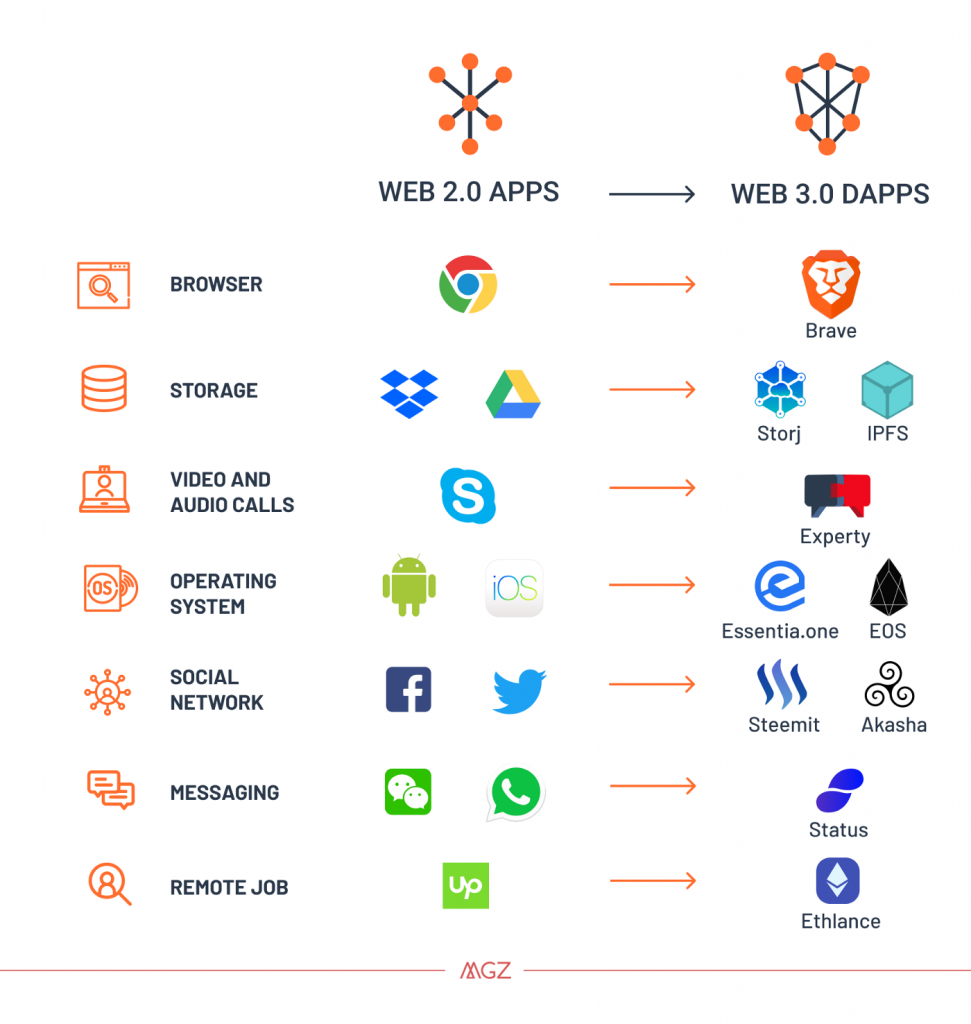
It is an umbrella term for a series of ideas aimed at cutting out the big internet intermediaries. In the new era, surfing the web no longer means logging on to the servers of Facebook, Google or Twitter.

Think of it this way: at the dawn of the Internet in the 1990s, it was «Web 1.0». The web was seen as a way to democratise access to information, but there was no good way to navigate the web beyond going to your friend’s GeoCities page. It was quite confusing and overwhelming.

Then came Web 2.0 in the mid-2000s, with platforms such as Google, Amazon, Facebook and Twitter bringing order to the Internet and making it easier to connect and transact online. Critics argue that these companies have become too powerful over time.

Web3 is trying to regain some of that power.

Matt Dreiherst, a Berlin-based artist and researcher who teaches on the future of the Internet at New York University, says: «Some companies own all this stuff, and we’re the ones who use it.

Dreiherst and other Web3 enthusiasts believe the answer is an iteration of the Internet in which new social networks, search engines and marketplaces emerge without corporate involvement.

Instead, they are decentralised, based on a system called blockchain, which is already the basis of Bitcoin and other cryptocurrencies. Think of it as an accounting system in which several computers store data at the same time and can all search it. The system is managed collectively by users, not by companies. Those who participate receive a «token». Tokens can be used to vote on decisions or to create real value.

In the Web3 world, people use a single, personalised account to control their data and create a public record of all their activities on the blockchain, from social media to emails to purchases.

«To the average person, it sounds like voodoo, says Olga Mack, an entrepreneur and blockchain professor at the University of California, Berkeley. But do you understand how electricity is generated when you press a button to turn it on? You don’t need to know how electricity works to understand how good it is. The same can be said of blockchain.

Right now, the idea of reshaping the entire Internet may seem like a distant digital utopia. However, Web3 is creating a new buzz and generating a lot of new money, especially from cryptocurrency investors.

It may seem strange at first, but Web3 is becoming increasingly popular, and technology companies are taking note.

The Web3 movement is underpinned by NFTs (windowless tokens), digital collectibles and other online items that can be bought and sold in cryptocurrency. Then there is the publicity stunt. Recently, cryptocurrency enthusiasts banded together to buy copies of the US Constitution in digital currency. They organised under the name ConstitutionDAO (DAO stands for Decentralised Autonomous Organisation, the name of an online collective of cryptocurrency enthusiasts united by blockchain and tokens). (It is very similar to Web3).

Dryhurst admits that Web3 is difficult to explain because it is ill-defined and takes slightly different forms depending on who is defining it, but he considers it the most advanced of all new technologies.

«Any new emergence of the internet is confusing at first,» he says.

For technologists and cryptographers, Web3 has been a grand theoretical vision for years. But in recent months, aspirations for a blockchain-based future have begun to dominate conversations on social media at tech conferences and in certain circles. Some large tech companies have even created dedicated Web3 teams.

For example, every time you send a message, you receive a token as a contribution, which gives you ownership of the platform and the opportunity to earn future revenue.

In theory, this also means that you can avoid the strict fees, regulations and requirements of tech companies. However, the big tech platforms are also on board with this idea.

It means that the value created can be shared by more than just owners, investors and employees,» says Esther Crawford, project manager at Twitter.

Crawford says Twitter is looking at ways to incorporate Web3 concepts into social networks, such as allowing users to log in one day and tweet from a cryptocurrency-related account instead of a Twitter account. His vision of the future is different: it is not that Twitter will be replaced by a crypto one. Rather, the point is that Twitter is introducing Web3 features on top of standard Twitter.

«For a long time, Web3 was very theoretical. But now there is a wave on top of it.

Will Web3 become the new normal?

According to experts, for Web3 enthusiasts, this technology is at best a link to Web 2.0, not a complete replacement.

In other words, blockchain-based social networks, transactions and businesses may grow and thrive in the coming years. But Facebook, Twitter and Google will never disappear entirely, say technology experts.

«It’s hard to say who will win,» says Dryhurst. «But Web 2 companies will take ideas from Web 3 and incorporate them into their services to remain relevant.»

He believes that many people want to be able to move their data and the history of their online interactions anywhere on the Internet, rather than staying on a single web platform.

«It’s fundamentally different from anything we’ve done before,» says Dreichurst.

But he admits that unlimited freedom can have worrying consequences for some people.

«The Faustian bargain is that it’s exciting for the same reason that there’s nothing to stop people from creating all kinds of communities, and there’s nothing to stop someone from creating a lot of them.

While decentralised social networks have proved attractive to white supremacists and other far-right groups, Sam Williams, founder of Arweave. A blockchain-based internet data storage project, claims that most small communities will decide what kind of speech to allow online, he said.

Overall, he said, a collective vote on interaction standards would be better than the current user experience on the major social media platforms.

If the current model continues, our experience of cyberspace will increasingly become a domain controlled by a small group of companies run by a small group of people. And in such a world, major technological problems will only get worse.

Another problem, of course, is government oversight. For now, blockchain-based tokens are caught in a web of regulations, but that could soon change as the Biden administration begins to set new rules for the industry.

How does Web3 fit into another vision of the future of the Internet: metaspace?

Facebook has recently changed its name to Meta and has made the creation of a «metaworld» one of its top priorities. A metaworld is a digital future in which everyone lives, communicates and works together in a virtual reality.

This means that users can seamlessly transfer their accounts and avatars from one site to another and from one service to another, instead of logging into an account managed by another company each time they visit a new site.

This is one of the ideals of Web3.

But true believers say there is no place for Facebook in the Web3 world, no matter how much the social network tries to be part of the next generation of the Internet.

«Facebook is always driven by the desire to enrich it,» says Williams. That’s not the way to run cyberspace,» he says.

How likely is it that Web3 is an exaggerated fantasy?
It doesn’t take long to find someone who is sceptical about Web3.

James Grimmelmann, Professor of Law and Technology at Cornell University, has already put the issue on record.

Web3 is vaporware,» says Grimmelmann, referring to a product that was announced but never materialised.

«It’s the promised future of the Internet, and it touches on all the things that people don’t like about the Internet today, even if they contradict each other».

If one of the triggers is opposition to handing over personal information to big tech companies, blockchain is not the solution, he says, because it would expose more data.

«It doesn’t make any sense,» he said. The problem with the internet is that there are too many centralised intermediaries, Vision said. Instead of having a bunch of different apps and websites, we put everything on the blockchain and put it all in one place.»

For Grimmelmann, Web3 represents the ideal spirit in which technologists are trying to embody the birth of the Internet, where everyone is free to enjoy the information superhighway, a perspective that technology companies have long embraced.

The development of the internet has always been a struggle between decentralisation and centralisation, he says. If you stray too far in one direction, the backlash will try to pull you in the opposite direction.

«Blockchain is interesting and solves complex problems in a new way,» he said. He said. They may be the next Internet toolkit, but that doesn’t mean the Internet is going to be built around them.

But many of the people who made their fortunes investing in cryptocurrencies during the pandemic are looking for something to throw money at at the NFT’s bored monkey yacht club.

Now, he says, Web3 is a place to start, even if it is largely theoretical.

«There are a lot of people who have money to invest. And we have to have a vision of where that money should be invested,» he says.

Examples of Web 3.0

Examples of Web 3.0 applications are Wolfram Alpha and Apple’s Siri, which can combine large amounts of information into useful knowledge and actions for people.

Wolfram Alpha

If you use Wolfram Alpha and Google tools to make a small comparison by typing the phrase «Brazil vs Argentina» in both search engines, you will see a big difference in the results.

In the case of Google, it turns out that most of these results are related to football matches between Brazil and Argentina. Note that the words «football» and «matches» are not included in the search.

Wolfram Alpha treats the search as a comparison of two countries and analyses the comparison by drawing out statistics, history, geography (maps), population, language and other useful aspects.

Siri

Apple’s Siri, on the other hand, uses voice recognition technology and artificial intelligence to deliver results and actions like

«¿Dónde está la pizzería más cercana?» o «¿Dónde está la pizzería más cercana?

“Distancia a la gasolinera más cercana”, o “Reservar una cita para mañana a las 9 de la mañana”.

In particular, traditional tools (Web 1.0 and 2.0) do not allow searching for all «likes» related to content published online. Text related to content posted online. This meant that they often brought distorted information from a large amount of information, and ultimately did not lead to the most relevant information for the user at the time.

Web 3.0 systems, however, seek contextual knowledge that is useful for people’s work, directing them to a variety of analytical outputs and potentially useful information.

One characteristic of Web 3.0 search engines is that users have to spend a lot of time navigating through a sea of information to find the information they really want to access.

Companies such as Apple and IBM have invested heavily in Web 3.0 technologies, and Google, for example, has acquired Semantic Web companies such as Applied Semantics and Metaweb Technologies several times in the last decade.

Web 3.0, cryptocurrency and blockchain

Web 3.0 is driven by decentralised protocols, which are the cornerstone of blockchain and cryptocurrency technologies, so we can expect strong convergence and symbiosis between these three technologies and other areas. They are interoperable, easily integrated, automated through smart contracts and can be used for everything from microtransactions in Africa. From censorship-resistant P2P file storage and sharing through applications such as Filecoin, to completely changing the behaviour and operations of any business to completely changing the behaviour and operations of any business.

Web 3.0 Technologies

Getty Images
When considering Web 3.0 technologies, there are a few things to keep in mind. First, the concept is not new: in 2006, Jeffrey Zeldman, an early developer of Web 1.0 and 2.0 applications, wrote a blog post in support of Web 3.0. However, it was in 2001 that the topic was first discussed.

The evolution of Web 3.0 technology

Web 3.0 emerges when the natural evolution of older generations of web tools is combined with advanced technologies such as artificial intelligence and blockchain to increase the interconnectedness of users and the use of the internet. Internet 3.0 can be seen as an improvement on the previous Web 1.0 and 2.0.

Web 1.0 (1989-2005)

Web 1.0, also known as the static Web, was the first and most robust Internet of the 1990s, but it had limited access to information and little user interaction. At that time, personalised web pages and commenting on articles did not yet exist.

Web 1.0 made it difficult for users to find the information they wanted because there were no algorithms for ranking web pages. In other words, the path was narrow and one-way, with content created by a few people and information coming mainly from directories.

Web 2.0 (2005-present)

Social networking (Web 2.0) became more interactive with the development of web technologies such as Javascript, HTML5 and CSS3, allowing new companies to create interactive web platforms such as YouTube, Facebook and Wikipedia. It has enabled start-ups to create interactive web platforms such as YouTube, Facebook and Wikipedia.

This has paved the way for the explosion of social media and user-generated content, as data can now be shared and distributed across a range of platforms and applications.

This Internet-era toolkit was pioneered by a number of Internet innovators, including the aforementioned Jeffrey Zellman.

Web 3.0 (still to come)

Web 3.0 is the next stage of the Internet, where the capability of artificial intelligence systems (the ability to process information in a way similar to human intelligence) is expected to make the Internet smarter and able to run intelligent programmes to help users.

Tim Berners-Lee has said that the semantic web must be «automatic» in its interactions with systems, people and home appliances. Both humans and machines will be involved in the content creation and decision-making process. This will allow highly personalised content to be created and delivered directly to each and every Internet user.

Main features of Web 3.0

To truly understand the next stage in the evolution of the Internet, four key characteristics of Web 3.0 need to be taken into account

  • Ubiquity
  • The Semantic Web.
  • Artificial Intelligence
  • 3D graphics

Since its inception, the Internet has undergone significant changes in function and purpose. The first websites were purely informative and did not allow users to interact with them. With the development of social networks and the emergence of sites such as Amazon and Wikipedia, the history of the Internet has entered a new phase, the Web 2.0 era.

Today, with the development of new technologies, a new concept called «Web 3.0» has emerged. This new version of the Internet is closely linked to the concept of the «Semantic Web». In general, the Semantic Web aims to offer a more personalised interface by introducing a number of languages and practices that can describe the characteristics of the user.

While there is still no consensus on the definition of this new concept and its implications for Internet use, there are a number of characteristics that will help to shape it.

What will this new and evolving form of the Internet bring?

  1. Smart Search.

Web 3.0 aims to build a new ranking system for websites, closely linked to the needs and characteristics of users. By logging on, users will have access to a more personalised platform.

  1. The evolution of social media.

Social communities on the Internet are becoming more numerous and complex. There are also more ways to connect to these networks.

  1. Faster.

New Web 3.0 features are driving the need for faster Internet. In response, major telecommunications operators are introducing broadband to provide a more satisfactory user experience.

  1. Connect to more devices.

Web 3.0 extends user connectivity beyond desktops and laptops to devices such as mobile phones, tablets and watches.

  1. Free content.

Free software and Creative Commons licences are more common in Web 3.0.

  1. Three-dimensional space.

Users can visualise the web in new ways, using three-dimensional space; Google Earth is an excellent example.

  1. Geospatial web.

Users can access information on the website based on their geographical location.

  1. Easy-to-use navigation.

New design trends seek to introduce a degree of standardisation, making it easier for users to navigate, while creating a space that can be edited and personalised by the user.

  1. Cloud Computing.

By creating new storage spaces for software and data, the web is becoming a viable space for a form of ubiquitous computing.

  1. Connected data.

Increasingly, information services are aggregating data from other sources to unify their response to users.